Renovotec · Android integration architecture
Teremware × MAI
An existing warehouse system. A different way to put it in someone’s hands.
- Problem
- Bring terminal-based warehouse picking to a back-of-hand device.
- My part
- Architected the Android bridge and its Intent-based device communication.
- Outcome
- A working proof of concept showing orders, picking prompts and error feedback.
The integration boundary · Explanatory diagram
- Existing WMSTerminal-style warehouse workflow.
- Teremware + Android bridgeTranslate the workflow and communicate through Android Intents.
- MAI devicePresent picking information and carry device interaction back into the flow.
What I owned
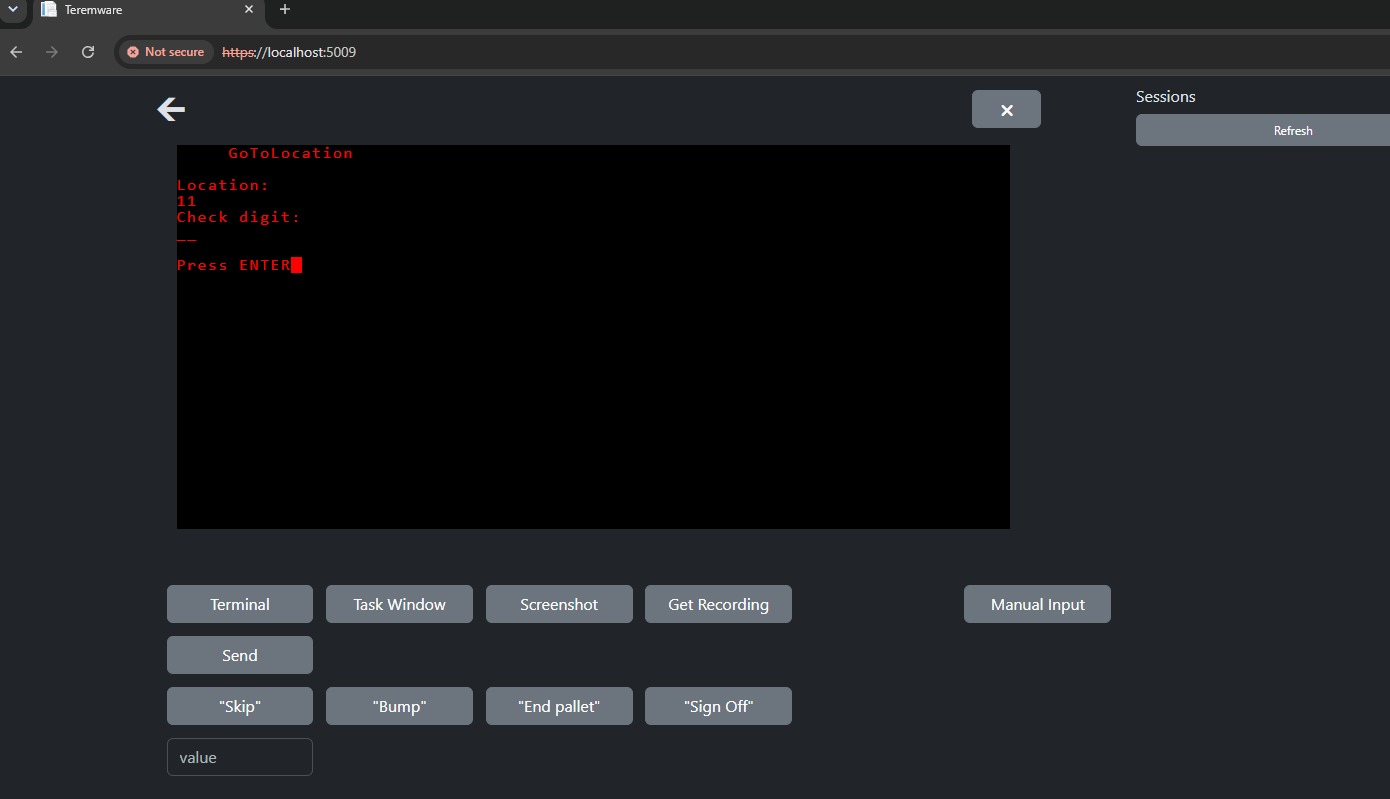
Teremware translates an older terminal-style warehouse system into modern picking workflows. The next requirement was back-of-hand picking rather than only voice interaction.
I architected the Android application that connected this workflow to the hand scanner through Intents. That meant working within an existing system while designing the new device-facing integration.
The useful part is the translation
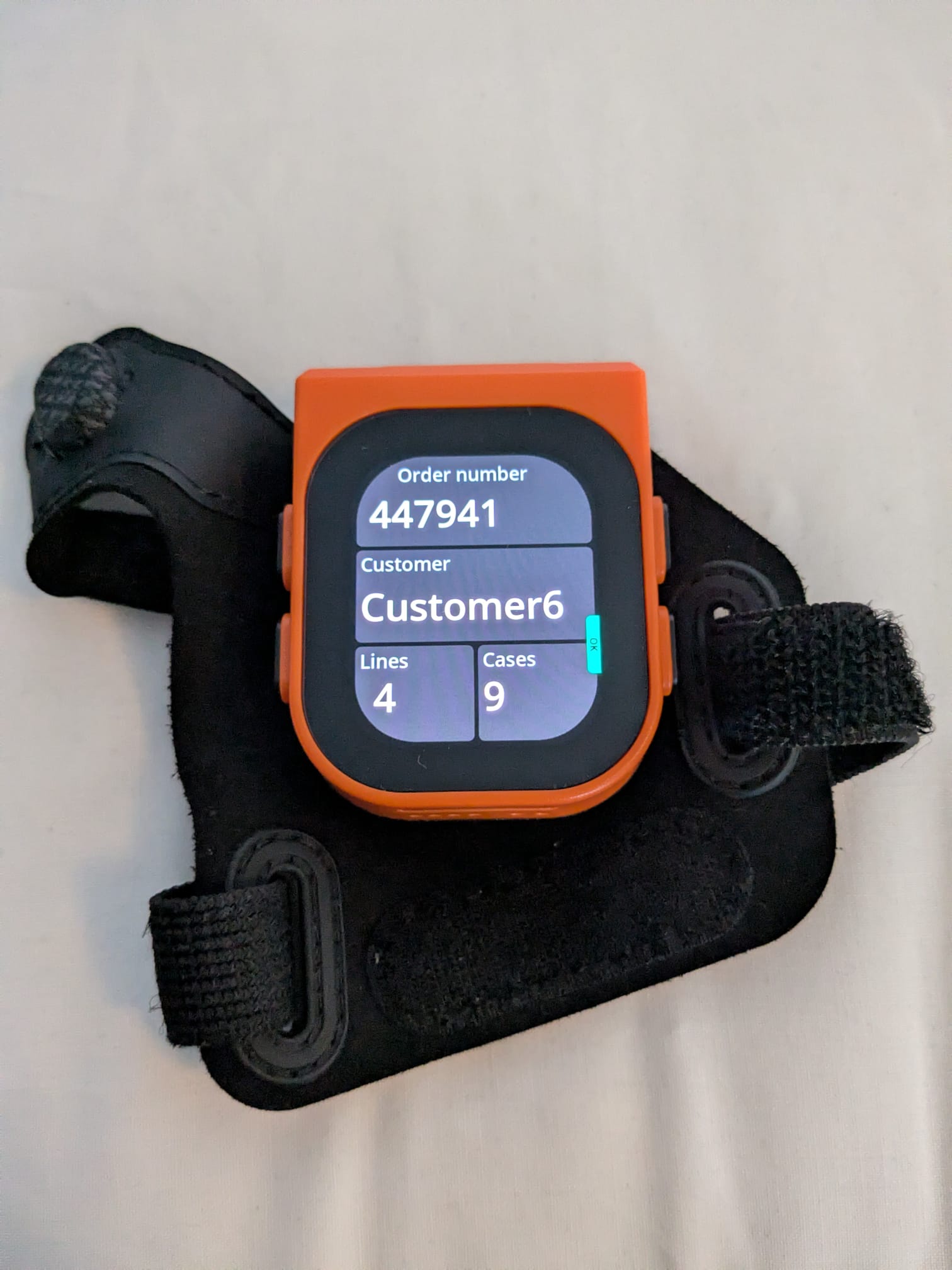
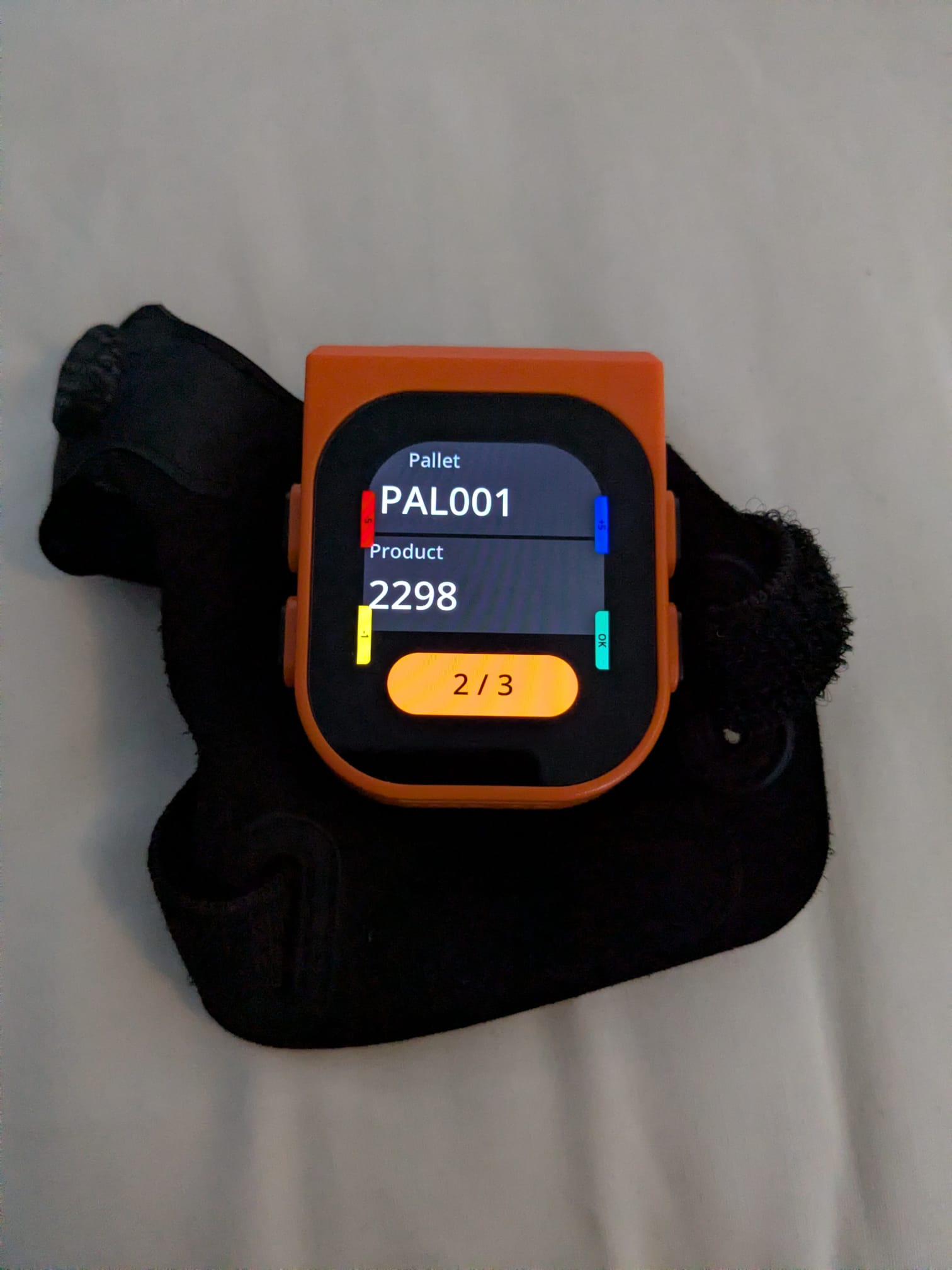
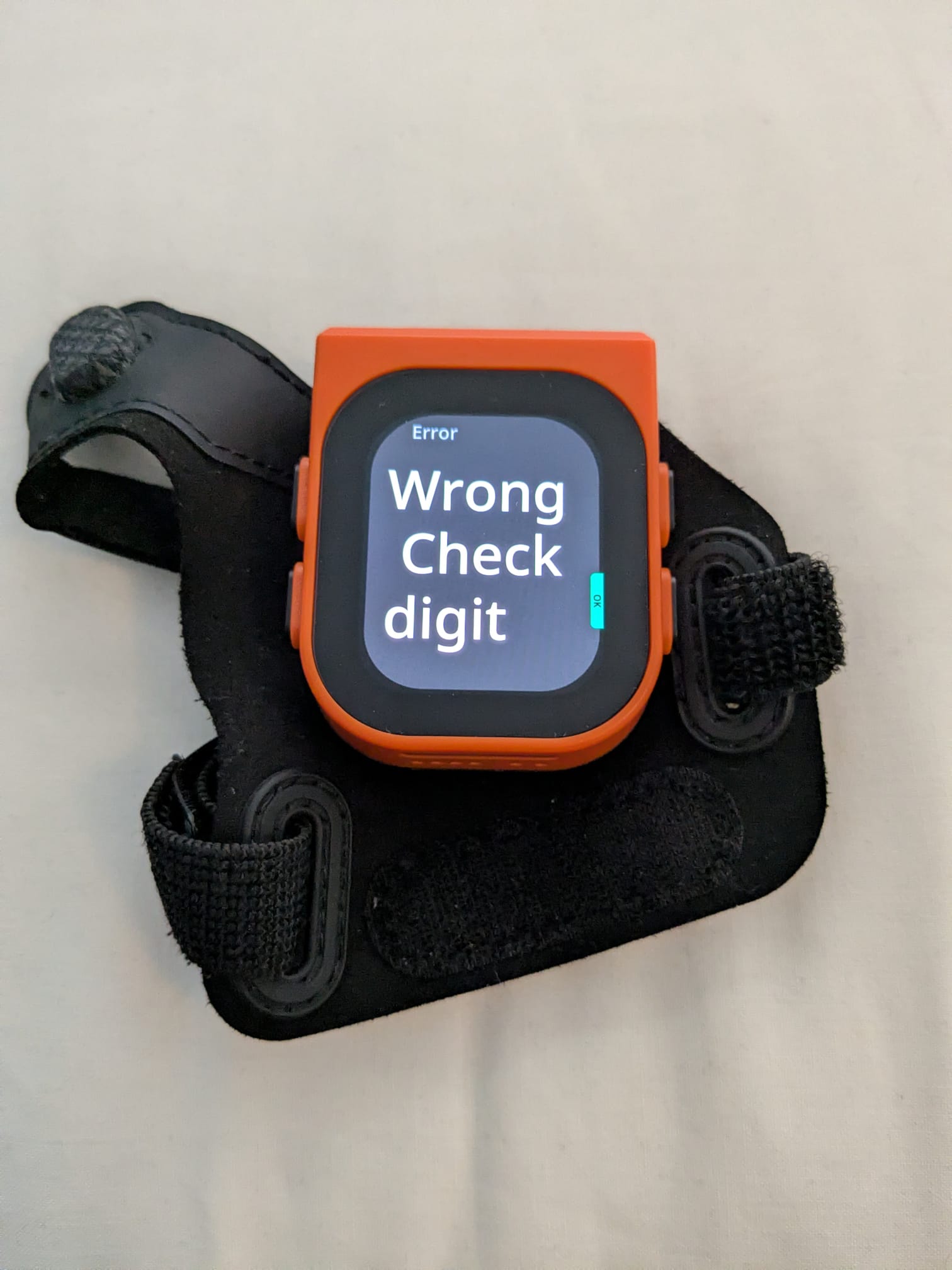
The operator needs a clear next action, not an entire terminal screen squeezed onto a small display. The photographs show three concrete states: an order overview, pallet/product picking information and a check-digit error.
The bridge brings those workflow states to the wearable. The device and warehouse system remain distinct components; my contribution was the Android integration architecture.
What the photographs establish
The proof of concept reached physical hardware. The visible error state is particularly useful evidence: feedback from the workflow can reach the operator on the device.
The next step beyond this proof of concept is validating the wider production integration and its failure handling.